Five interconnected research lines. Two are major active projects with multiple papers in flight; one is a signature line published continuously since 2010; the other two are an established China-focused theme and a newer methodological direction.

Exclusion and spatial inequality in housing markets

Major active project.

Housing markets are where exclusion mechanisms become visible and measurable. Some are prejudice-driven, such as landlords and agents screening by name, photograph, or biographical detail. Some are economically rational at the individual level but produce identical group-level effects, as when incumbents protect a scarce local resource from outsiders. Some operate through the housing supply itself such as planning constraints, greenbelt rules, the gap between elastic in-migration and inelastic stock. My work treats housing as the test ground on which these mechanisms can be measured and compared, and asks how their spatial pattern turns individual-level decisions into population-level inequality. Discrimination is one mechanism of exclusion in this frame, not the frame itself.

A first cluster of work develops a tripartite framework for distinguishing race-based, symbolic-stigma, and foreignness-based screening in housing markets. The framework separates prejudice-driven gatekeeping (Becker / Phelps / Akerlof–Kranton lineages) from rational in-group resource protection — the latter often produces the same observed gap but responds to different policy levers. A meta-analysis of 54 correspondence-test studies across 22 countries shows that the standard “ethnic-minority” discrimination penalty decomposes meaningfully into these three components, and that anti-discrimination interventions (warning letters, sanctions, customer-side norm-shifting) perform differently across them in randomised field-experimental designs.

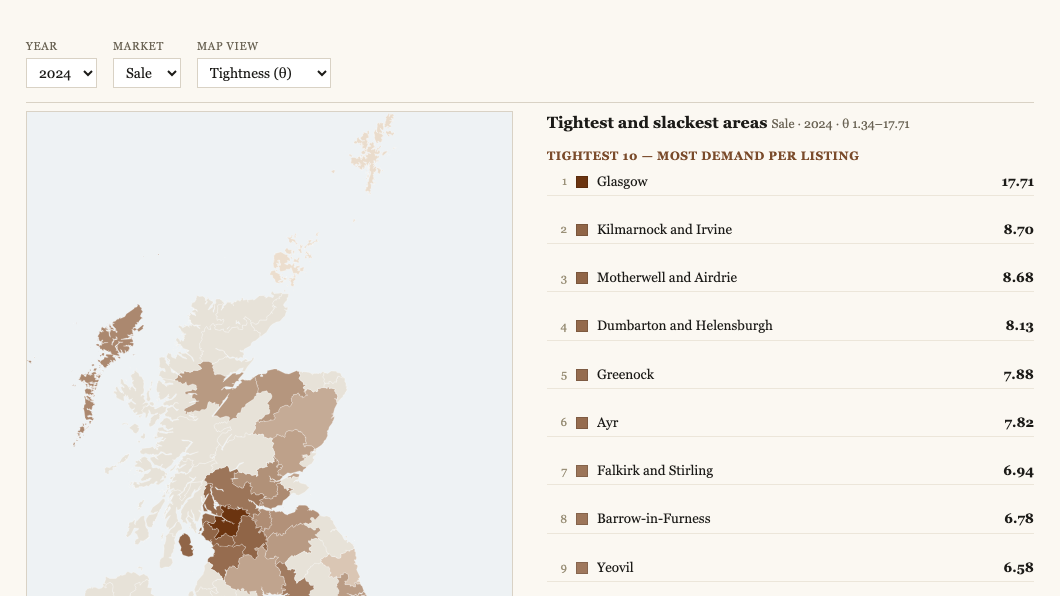
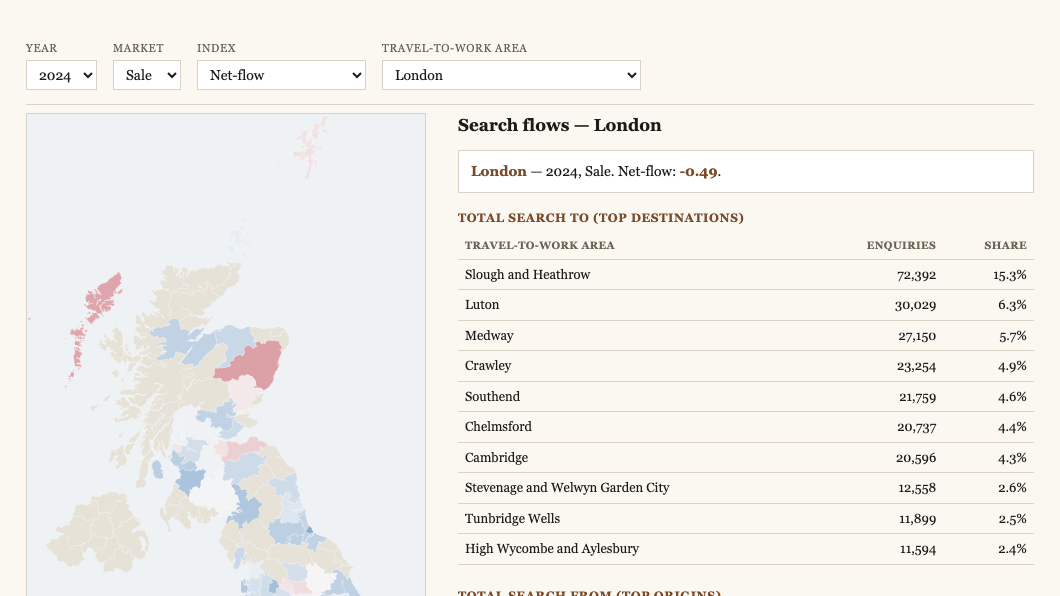
A second, newer cluster is a three-year UK programme on housing search, supply, and the spatial incidence of remote work. It builds a family of revealed-demand indices from search-listing data; joins demand to supply to produce a spatial-tightness index (Theil decompositions, Moran’s I / LISA clustering at the Travel-to-Work Area level); validates the demand signal as a leading indicator of realised prices; and then estimates the housing-cost incidence of remote work, which is a regressive cross-group externality in which high-wage teleworkers’ relocation raises housing costs for non-teleworking locals where supply is inelastic. The capstone integrates these elasticities into a quantitative spatial general-equilibrium model with explicit efficiency-versus-equity accounting; housing-supply elasticity is the policy lever connecting the two halves.

The two clusters converge on a common question: how spatial constraints turn individual-level decisions (a landlord’s screening, a teleworker’s relocation) into population-level inequality, using complementary data and methods.

Representative papers: Bao (2026, working paper, Journal of Urban Economics — tripartite framework); Huang & Bao (2026, Housing Studies); Wang et al. (2026, JRFM); the UK demand–supply programme (P1–P6 in progress, 2026–2029).

Spatial personality

Major active project, emerging.

People differ on stable psychological traits, e.g. the Big Five framework is the dominant operationalisation, and these traits predict everything from career choices to political participation to health outcomes. Until recently, personality research has been constrained by self-report questionnaires that cannot scale beyond a few thousand participants. The advent of digital traces (social-media text, mobility data, visual content, smartphone sensors) and AI-based inference methods has shifted the constraint: we can now estimate personality at the scale of millions and aggregate the estimates to regional units (counties, cities, nations).

My current work introduces a Domain–Scope Framework for AI-based personality inference, maps the methodological landscape across linguistic, visual, audio, smartphone, physiological and multimodal data sources, and applies the resulting infrastructure to substantive questions: how regional personality shapes entrepreneurship, residential mobility, urban resilience, and voting. A meta-analysis of geographic personality research across 36 published studies and a methodological review of 95 papers in AI-based personality inference provide the empirical and analytical backbone.

Representative papers: Bao, Zhang & Bao (2026, working paper), Obschonka et al. (2020, Small Business Economics, cited extensively in the WP).

Behavioural economics of housing decisions

Signature published line.

Households making housing decisions deviate systematically from textbook-rational behaviour. They are reference-dependent (anchored to the price they paid, even when current prices have moved); they exhibit loss aversion (refusing to sell at perceived losses, distorting market liquidity); they over-extrapolate recent trends, mis-time entry and exit. The behavioural-economics framing carries direct implications for housing policy: nudge-style interventions can adjust margins where the canonical rational-actor model predicts no response.

My work in this line spans reference dependence in UK and Chinese housing markets, loss aversion among developers timing project sales, and the behavioural foundations of homeownership across generations.

Representative papers: Bao et al. (2023, Housing Studies); Bao (2020, Behavioural Science and Housing Decision Making, Routledge); Bao et al. (2021, Journal of Housing and the Built Environment).

Land use policy in China

Established theme, ongoing.

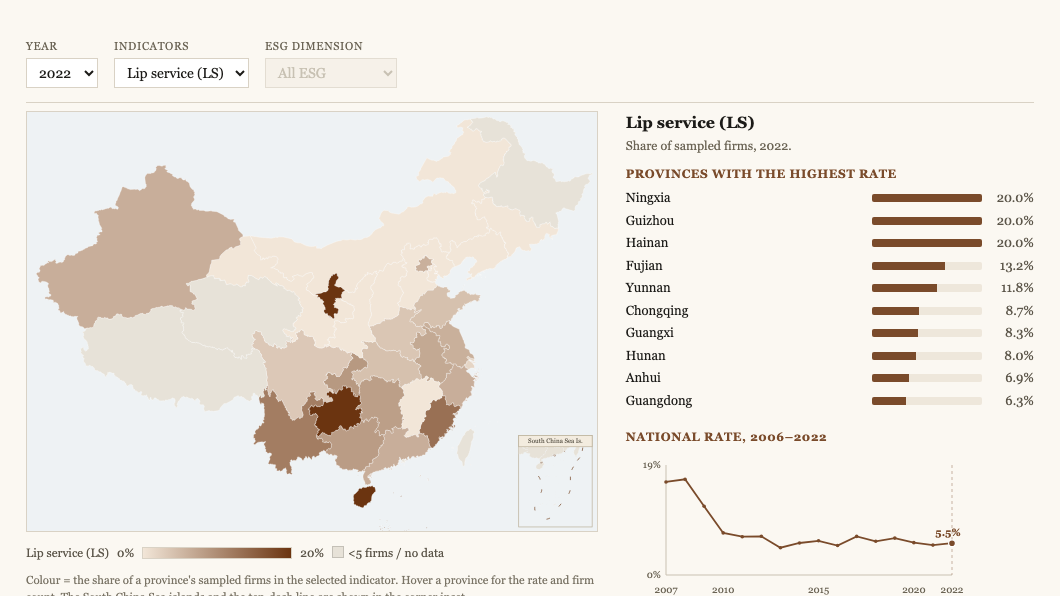
Land-use regulation in China differs structurally from most market economies: rural and urban land regimes operate under distinct legal frameworks, local governments are simultaneously regulators and beneficiaries of land development, and the resulting policy outcomes carry implications for inequality, environmental quality, and economic productivity that I find continuously interesting.

My published work in this line examines the return of state control over land markets, off-farm employment and land-use efficiency, local-government debt financing of infrastructure, behavioural land-use policy, and the political economy of rural homestead reforms. Land Use Policy is my home journal in this line; six papers have appeared there since 2020.

Representative papers: Bao et al. (2024, Land Use Policy); Bao et al. (2026, Land Use Policy — on hidden costs of policy uncertainty in industrial land development).

AI and computational methods for spatial analysis

New direction.

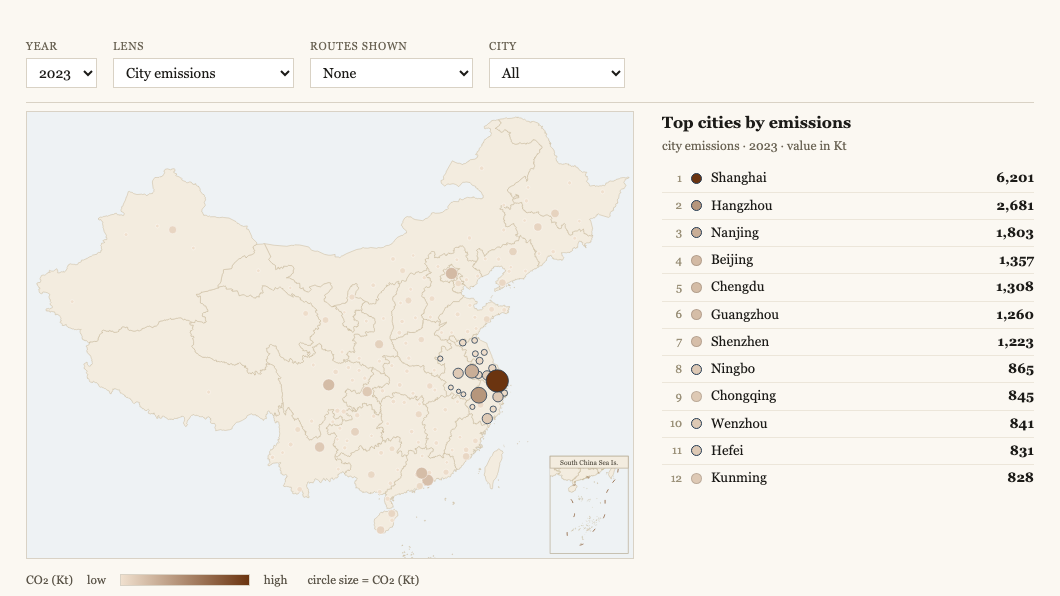
A through-line connecting the two major projects is methodological: each depends on data and inference techniques that were not available a decade ago. This research line treats those methods as substantive research objects in their own right: surveying their capabilities, identifying their failure modes, and proposing frameworks for their responsible deployment in spatial-analytic contexts.

Current threads include AI-based personality inference (foundational to the Spatial Personality project), computational analysis of crisis-time political discourse on social media (with applications to housing-regulation accountability), and AI-driven urban-resilience perception research.

Representative papers: Tian, Li, Bao et al. (2026, Sustainable Cities and Society); Bao, Zhang & Bao (2026, working — methodological synthesis).


Working with me

I supervise doctoral candidates on the above themes. Prospective students should consult the Cambridge Land Economy PhD programme page for admissions information and contact me directly to discuss fit before applying.

I welcome collaboration enquiries from researchers in adjacent fields such as applied psychology, computer science, urban planning, behavioural public administration. The Lab for Interdisciplinary Spatial Analysis is the institutional home for such work.

For specific paper inquiries or media requests, email me.